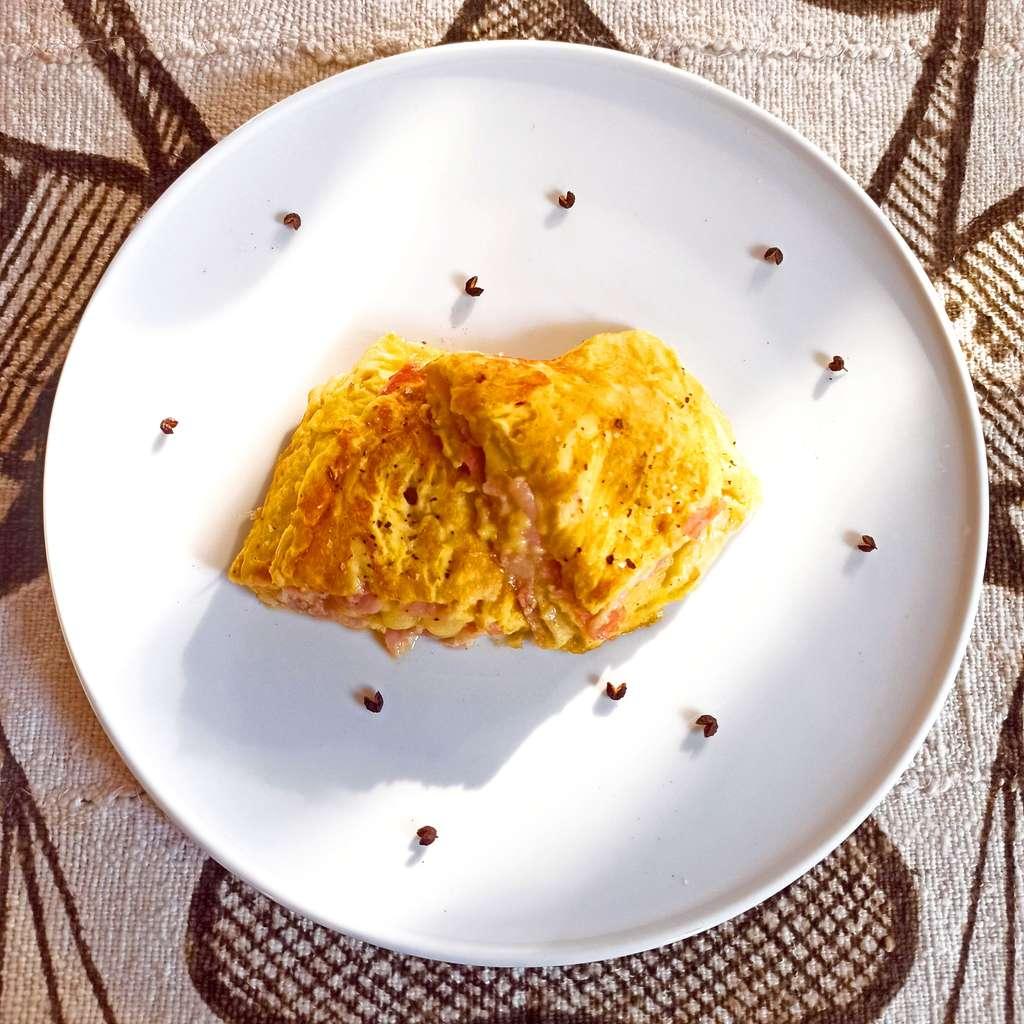
French technique with a garden-fresh filling
Layered omelette with baby carrots and courgettes
Layered omelette made using the Montersino technique, filled with sautéed baby carrots and courgettes, creamy and without a browned crust An omelette seems simple. And in a way it is: three eggs, a frying pan, a few minutes. But the difference between a mediocre omelette and an extraordinary one lies entirely in the technique, and this is Luca Montersino's method. Clarified butter instead of ordinary butter, eggs just lightly mixed without incorporating air, constant movement that creates exceptionally thin internal folds: the result is something completely different from the Italian frittata that many people know. Creamy, pale on the outside, delicately layered inside. In this vegetarian version, the filling consists of baby carrots and courgettes sautéed in a frying pan with a drizzle of extra virgin olive oil , sweet, light, and able to add colour without overpowering the delicate flavour of the eggs.
The recipe
Flaky omelette with baby carrots and zucchini
| 3 pieces | egg |
| 15 g | cream |
| 15 g | Parmigiano |
| 1 to taste | clarified butter |
| 1 to taste | salt |
| 1 to taste | white pepper |
| 1 to taste | Timut pepper |
| 1 to taste | carrots |
| 1 to taste | zucchini |
| 1 to taste | extra virgin olive oil |
Prepare the vegetables: sauté the baby carrots in a pan with a drizzle of extra virgin olive oil for about 3 minutes, add the zucchini and continue for another 2–3 minutes. The vegetables should be soft but not overcooked. Season with salt and set aside.
Prepare the mixture: break the eggs into a bowl and add the cream, the Parmigiano, the salt and the pepper. Careful: do not beat them too much. You only need to break the yolks and blend lightly — incorporating too much air would turn the omelette into a spongy frittata instead of keeping it creamy and flaky.
Heat the pan: use a non-stick pan of about 20–22 cm. Heat it well and add a knob of clarified butter.
Cooking and movement: pour in the mixture. As soon as the edges begin to set, use a fork or a spatula to bring the cooked egg from the edges towards the centre, tilting the pan so that the still-liquid egg runs into the empty spaces. This continuous movement is the heart of the technique: it creates the very thin inner layers that give the flaky effect.
The fold: when the base is cooked but the surface is still baveuse — slightly runny and creamy — spread the sautéed vegetables over half of the omelette and fold it over itself in three, like a wallet. The inside will not be a single block, but a succession of soft, creamy layers with the vegetables in the middle.
Note: as Montersino points out, a true French omelette must stay very pale on the outside, without the dark crust typical of the Italian frittata. If you see any browning, the pan was too hot.
Montersino's secret: clarified butter is not a detail you can swap out: ordinary butter burns before the pan reaches the right temperature, and that bitter note can be tasted. If you do not have it ready, you can clarify it in a few minutes by melting the butter over low heat and skimming off the foam on the surface. As for the vegetables, the less you cook them in the pan the better: they will finish cooking inside the omelette, and staying slightly crunchy makes all the difference.
Timut pepper is optional: it is an addition of ours, plain white (or black) pepper is fine too.