Piedmontese tradition in its best-loved dessert
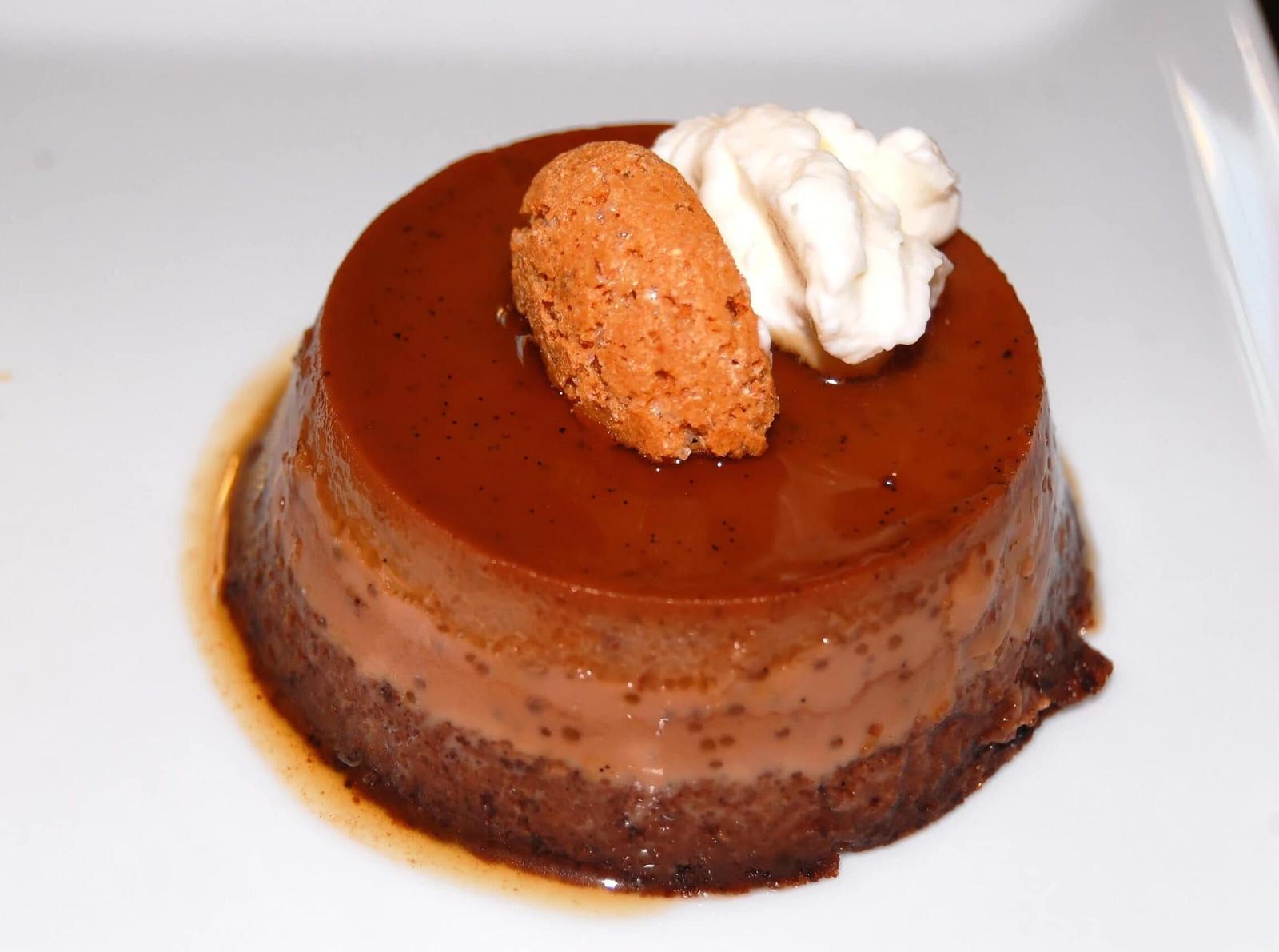
Enrico's traditional bônet, the quintessential Piedmontese dessert
Enrico's bônet is one of those recipes that tell the story of a region even before you taste them. An ancient spoon dessert from the Piedmontese tradition, made with amaretti, cocoa and a touch of rum, it brings centuries of Langhe history to the table through the simplicity of a few carefully chosen ingredients. We prepare it according to the traditional recipe, without shortcuts, and many guests ask us for the recipe before they even leave. We serve it on request; it isn't a breakfast dessert in the traditional sense of the term. But if you'd like it to start your day in a special way, we'd be honoured to bring it to your table. Because caring for traditions also means this: not leaving them tucked away in a drawer
The recipe
For the bônet
| 600 ml | milk |
| 150 ml | cream |
| 340 g | egg |
| 150 g | caster sugar |
| 150 g | amaretti biscuits |
| 75 g | unsweetened cocoa powder |
| 30 g | espresso coffee |
| 15 ml | rum |
| 1 g | vanilla |
For the caramel
| 75 g | caster sugar |
For the decoration
| 200 g | sweetened whipped cream |
| 50 g | amaretti biscuits |
| 3 g | coffee beans |
| 1 to taste | unsweetened cocoa powder |
You will also need a ring mould (savarin), or loaf-cake or crème caramel moulds 7 cm in diameter x 3 cm high — a slightly taller mould is ideal, because a well-made bônet shows 3 distinct, visible layers.
For the bônet: pour the cream and the milk into a small saucepan and bring to the boil (if you like, add a little lemon zest and the vanilla pod, letting it simmer on the lowest heat for about 30 minutes — increase the quantities by about 10% and check that you do not exceed 750 g of liquid in total). Separately, in a bowl, mix the eggs with the sugar without whipping them, then add the coffee, the cocoa, the vanilla and the rum and mix. Incorporate the coarsely crushed amaretti and keep working the mixture.
If you also use the chocolate, melt it by pouring the hot milk-and-cream mixture over it, slowly in the centre, straining it through a sieve and stirring as for a ganache (alternatively, pre-soften the chocolate in the microwave for about 1 minute and 10 seconds at 900W). Then pour everything over the mixture and stir with a whisk. If you do not use the chocolate, pour the boiling milk and cream directly over the mixture and mix well.
For the caramel: pour a little sugar into a hot small saucepan and let it melt over a low heat, adding more sugar a little at a time until you obtain an even caramel. Pour the caramel onto the bottom of the mould and spread it over the whole surface, then pour in the bônet mixture.
Place the mould in a baking tray, pour cold water into the bottom and bake at 130–140 °C for about 1 hour. If the mixture puffs up during cooking, open the oven slightly to lower the temperature and prevent the bônet from becoming grainy.
Remove from the oven, let cool and put in the refrigerator — ideally let it rest at least overnight, so that the flavours blend.
To serve, run the blade of a knife around the edges of the mould, gently turn it over onto a serving dish and unmould. Remove the excess caramel with a spatula, then garnish with the whipped cream using a piping bag (or a spoon, for a more rustic look). Finish with the amaretti, the coffee beans and a dusting of unsweetened cocoa.
The host's secret
Resting in the refrigerator is not a detail: it is the step that turns the bônet from good to unforgettable. A night's rest allows the amaretti to dissolve into the mixture, the cocoa to soften and the rum to blend in without overpowering the other flavours. If you can, make it the day before — you will thank yourselves when it is time to serve it. And choose good-quality amaretti, artisanal if possible: in Piedmont there is no shortage of them, and you can taste the difference.
Do you have special dietary requirements? When booking directly with us, you can let us know about your intolerances: we'll make sure you have this bônet, or another dessert prepared especially for you, for breakfast.