In Turin, you don't always need to enter a museum to see some art. In San Salvario, you'll find it on shop shutters; in Barriera di Milano, it covers entire building façades, with Millo's large black-and-white figures; in Borgo Campidoglio, it has become part of the streets and buildings of an old working-class neighbourhood.
This itinerary takes you through painted Turin, the city of murals and urban regeneration projects. Some works tell stories of integration and coexistence, others preserve political memories, while still others have changed the appearance of squares and neighbourhoods. Some are by international artists, while others have emerged from collaborative work with local residents.
One thing to bear in mind: street art can change, so before setting out, check that the works are still visible and that the directions are up to date.
On foot Walking: 19.7 km, 4 h 55 min
-
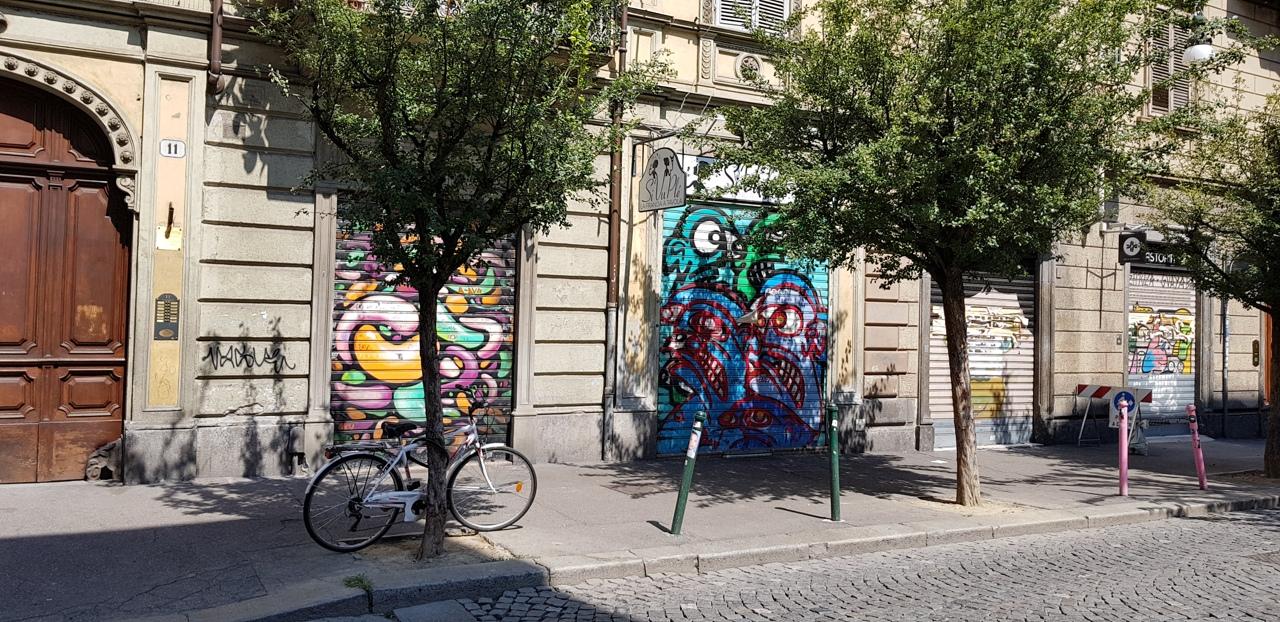 Shutters in San Salvario
Painted shop shutters in San Salvario
San Salvario: painted shop shutters and the art of integration
What it is: San Salvario is one of Turin's liveliest and most multicultural neighbourhoods. Over the past twenty years, it has been the setting for urban regeneration projects through art: shop shutters have become works of art, while blank building façades display murals telling stories of integration, coexistence and identity.
Why it's special: San Salvario shows that urban art can change a neighbourhood. It doesn't erase problems, but it creates beauty, dialogue and community pride. Walking here means seeing how art can be a tool for social regeneration, not just an aesthetic improvement.
-
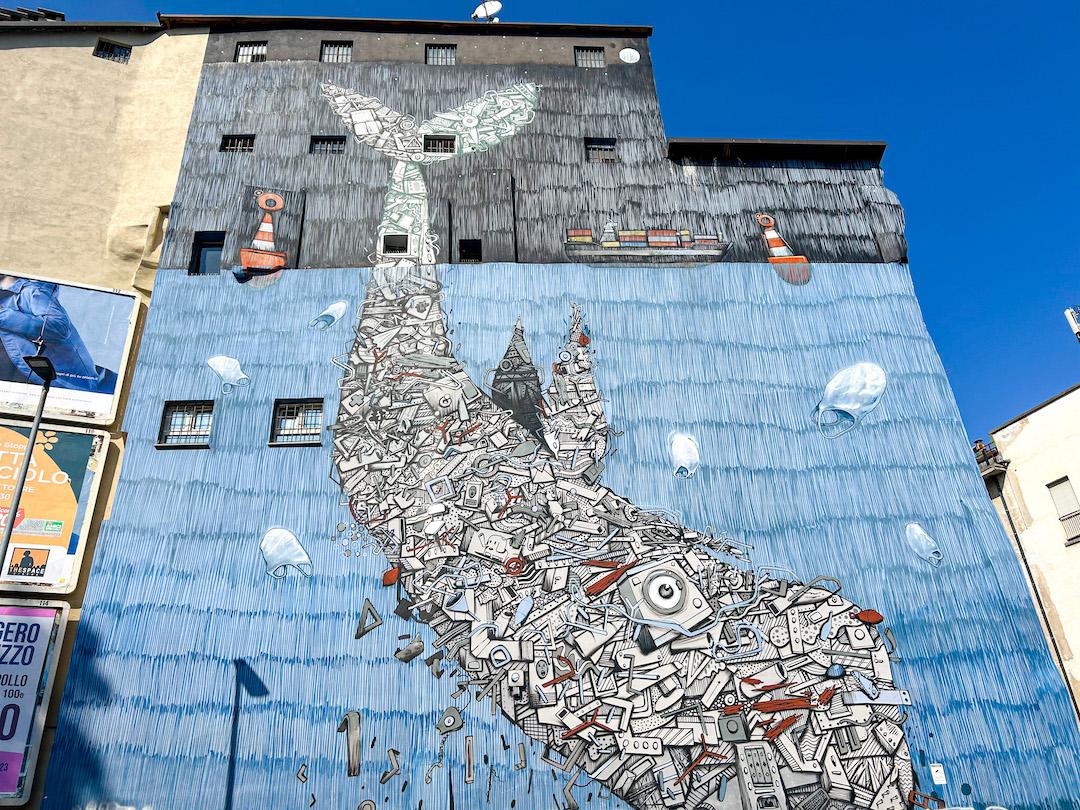 The Whale of Porta Palazzo
Borgo Dora / Porta Palazzo – street art between multiculturalism and markets
What it is: This area has a long history of murals associated with hospitality and multiculturalism. Porta Palazzo is home to one of Europe's largest open-air markets (if not, according to some sources, the largest), a crossroads of cultures, languages and flavours. The street art here reflects this mixed cultural identity.
Why it is special: Borgo Dora/Porta Palazzo shows how street art can tell the living history of a neighbourhood. This is not art confined to a museum: it is art that exists alongside markets, ethnic shops and historic workshops. It is popular art in the truest sense of the word.
-
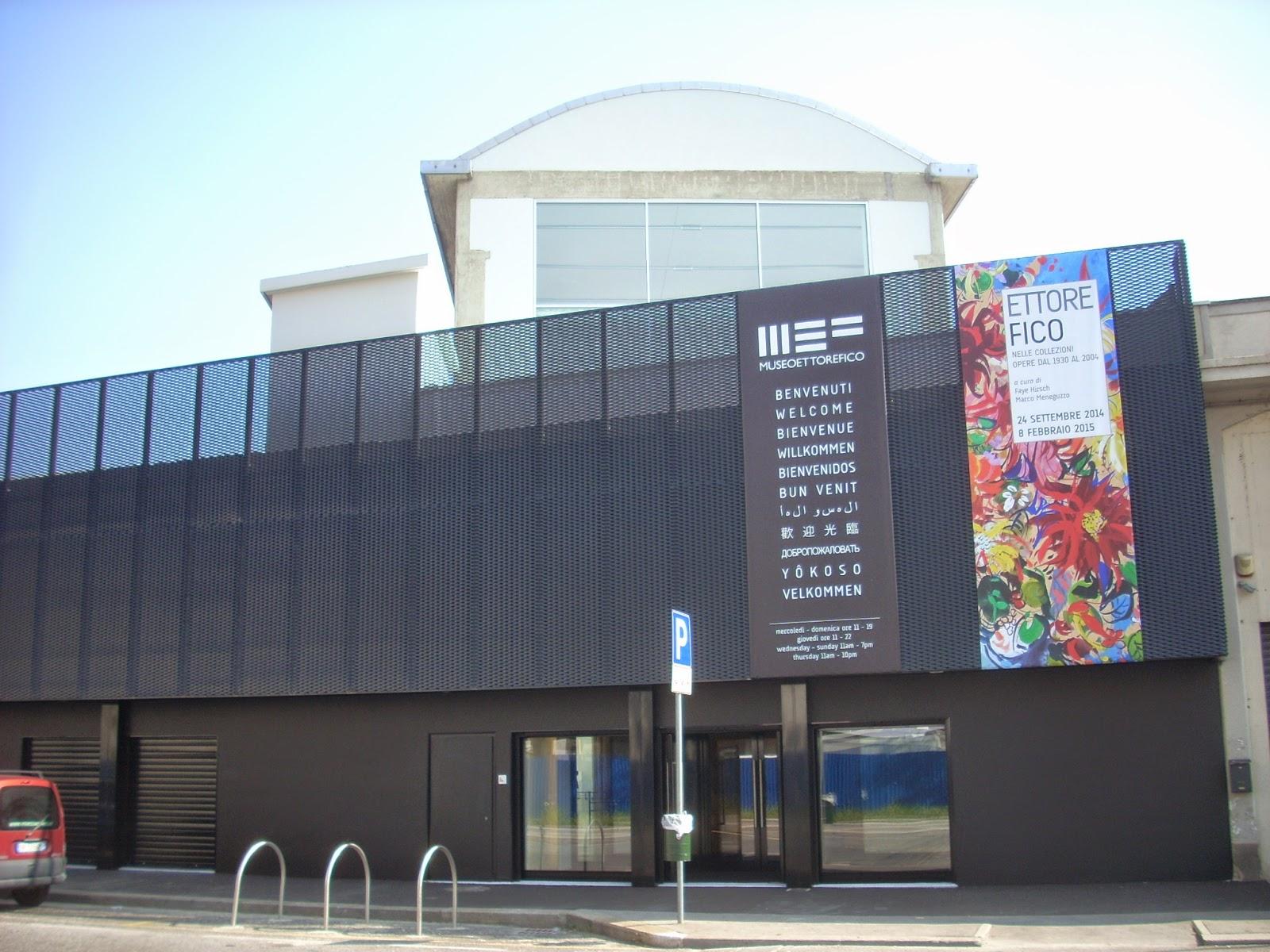 Museo Ettore Fico
Museo Ettore Fico, the beating heart of urban art
MEF – Museo Ettore Fico (until 2026 at Via Francesco Cigna, 114; now Fondazione Ettore e Ines Fico, Via Pessinetto 10/G)
What it is: The MEF was housed in a former factory that built machinery for enamelling copper wire, a remarkable example of industrial regeneration. It was a contemporary art museum that also promoted street art projects in the surrounding neighbourhood. The Via Cigna premises closed in 2026 and its activity has moved to Via Pessinetto 10/G.
Why it matters: The MEF has been one of the driving forces behind the artistic transformation of Barriera di Milano. It has brought international artists to work in the neighbourhood, involved local residents and turned grey walls into works of art.
-
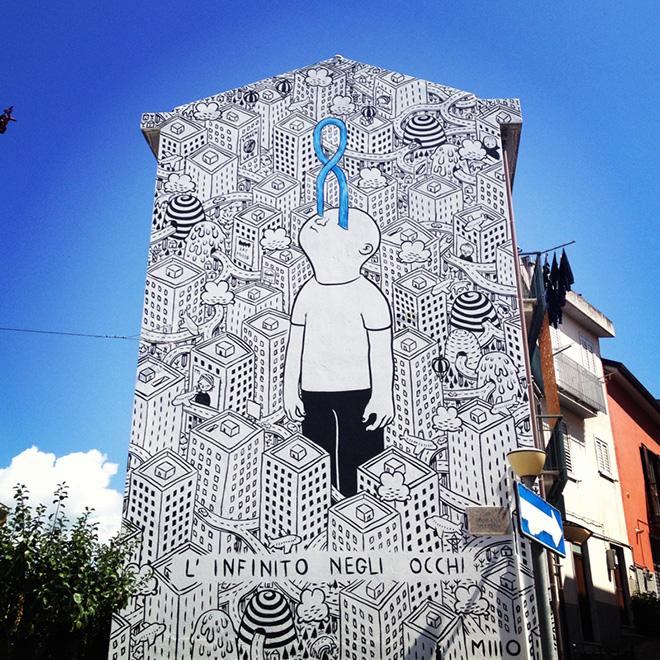 Millo's giants
Barriera di Milano – the B.Art project and Millo's giants
What it is: The B.Art project has transformed 13 blank façades in the neighbourhood into monumental works of art. They are scattered across Barriera: in corso Palermo (at numbers 98 and 124), corso Novara (65/67) and corso Vigevano (2), in piazza Bottesini (6) and in via Bologna (77), via Brandizzo (98), via Cherubini (63), via Crescentino (34), via Cruto (3), via Martorelli (48), via Montanaro (60) and via Scarlatti (52). The artist is Millo (Francesco Camillo Giorgino), an artist from Puglia who has created a unified visual narrative through his giant black-and-white figures.
Millo's style: Millo's murals are unmistakable: enormous human figures (sometimes 15-20 metres tall) drawn in black and white, with clean lines and poetic compositions. His characters, always out of scale, move through a city dense with buildings and details. They explore the relationship between people and the urban fabric, between individuals and the community.
Why it's special: Millo's murals have transformed a troubled neighbourhood (Barriera di Milano experienced social and economic problems for years) into a public art gallery. Residents have rediscovered a sense of pride and identity. Tourists come from all over Europe specifically to photograph the giants. It's art that changes reality.
-
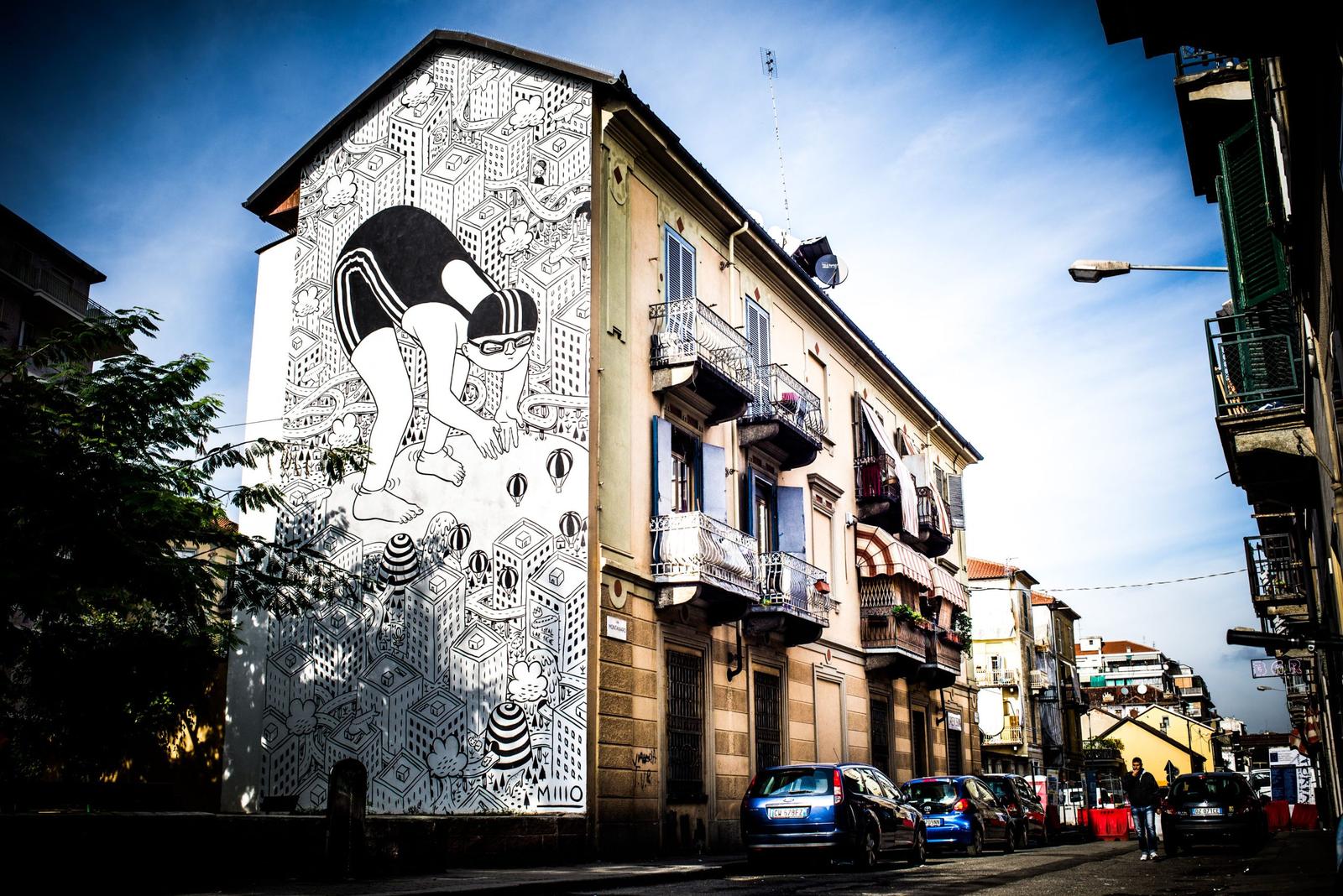 Progetto B.Art
Progetto B.Art and the other artists of Barriera di Milano
Why it's special: The variety of styles, techniques and artistic visions shows how Barriera di Milano has become an international artistic laboratory. B.Art is a public project, born from an international call of the Urban Barriera programme, but carried out with the active involvement of local residents. It's participatory art.
-
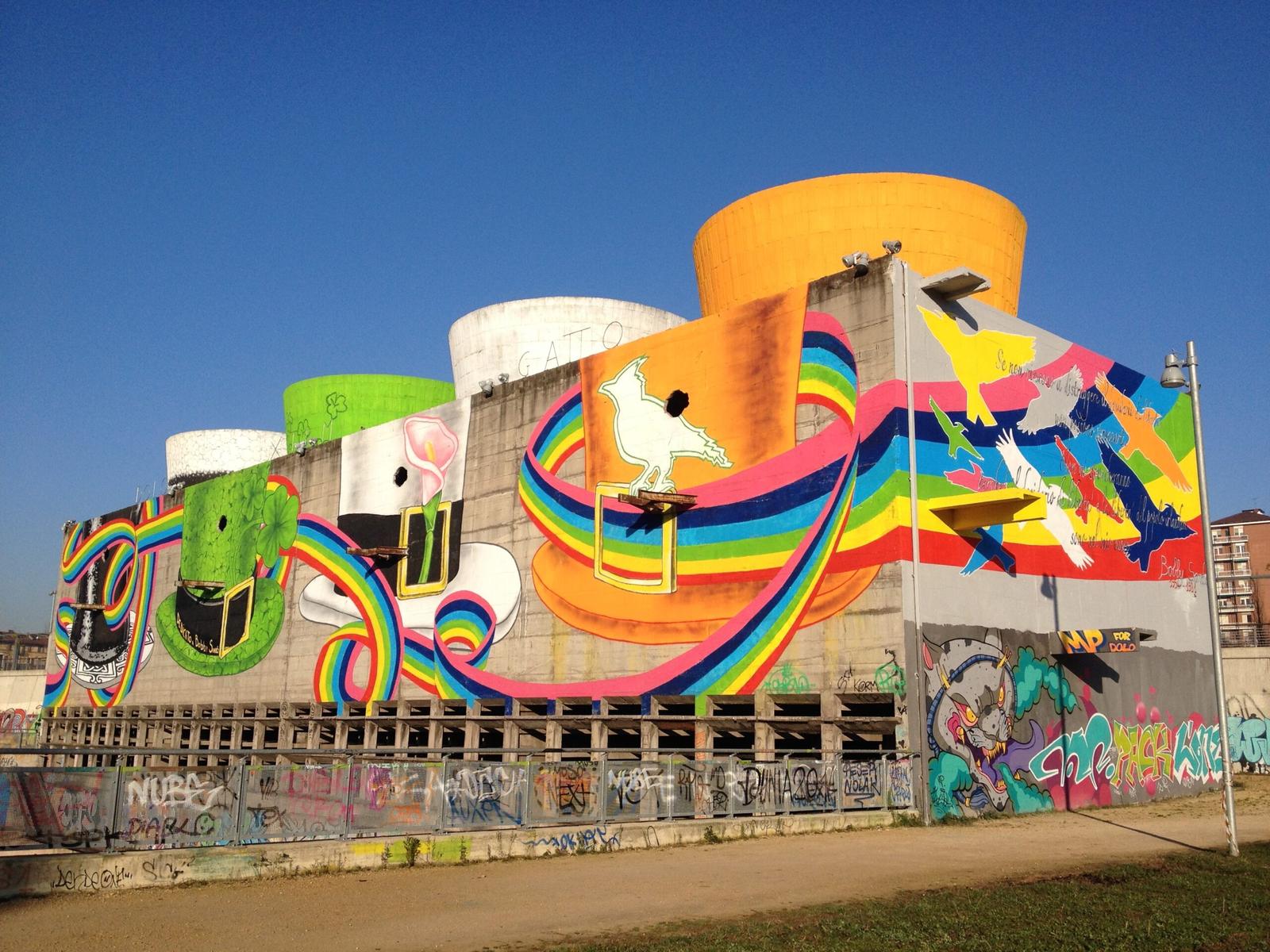 Bobby Sands
“Bobby Sands” mural – a piece of history
What it is: The mural is dedicated to Bobby Sands, an Irish activist who died on hunger strike in 1981, and remembers him with the symbols of Irish culture. Painted in 2014 by the writers Dolo, Gatto and XTRM, it covers four cooling towers of the former steelworks, in Parco Dora.
The story: The mural was created in the autumn of 2014 as part of the project «Le stagioni di Sands», curated by the Associazione Fiori di Ciliegio. It represents the political and social roots of Turin's urban art.
Why it's special: This mural shows that street art is not just about appearances: it can be political, social, collective memory. It's art that takes a stand.
-
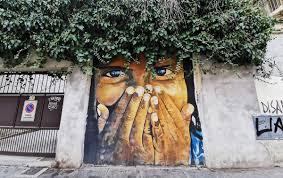 Borgo Campidoglio
MAU – Museo d’Arte Urbana (Borgo Campidoglio) – one of the first open-air art museums in a major Italian city
What it is: The MAU was founded in 1995, when a group of artists began painting the walls of the low houses in this 19th-century working-class district. Today it has over 200 artworks spread across dozens of buildings.
The story: Borgo Campidoglio was a working-class neighbourhood left on the margins. The artists saw its potential: the walls of its low houses, perfect for hosting the works. They asked the residents for their consent and began painting. The result is a magnificent contrast between old Turin architecture and modern art.
Why it's special: The MAU is a pioneer of Italian street art. When it was founded (in the 1990s), street art was not yet recognised as art. Here it became a public, free, permanent museum. It showed that art can exist outside galleries, that it can be accessible to everyone and that it can transform a neighbourhood.
-
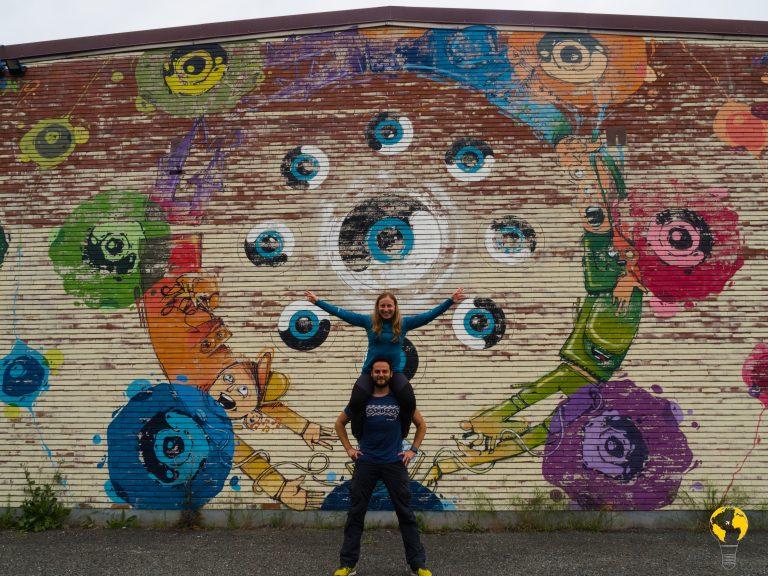 Piazza Santa Rita
Piazza Santa Rita – urban art as a tool for renewal
What it is: Piazza Santa Rita underwent a major urban art project that revitalised the entire square, turning it into a neighbourhood landmark through colours, geometric shapes and installations.
The project: Local and international artists worked with the community to transform the square: artistic paving, painted benches, decorated walls, sculptural installations. These aren't just murals: it's participatory urban design.
Why it's special: Piazza Santa Rita shows that urban art can be a tool for regeneration, not only aesthetic but also social. The square has become a gathering place: markets, events and neighbourhood celebrations. Art has created a lively public space, not just something beautiful to look at.
And… we’re off from here
For “Turin Urban Art”, you set off from Colazione da Augusta after a homemade breakfast. Your car stays in the courtyard while you reach your destination on foot or by public transport. We promise to repeat that in the next itinerary too.
The route
The map loads after consent to third-party content (OpenStreetMap).
These are the essential stops, but there is much more
When you book your stay with us you receive the complete step-by-step itinerary, a practical box with directions to get there and back, tips on what to see and a final treat to round off the themed day.